
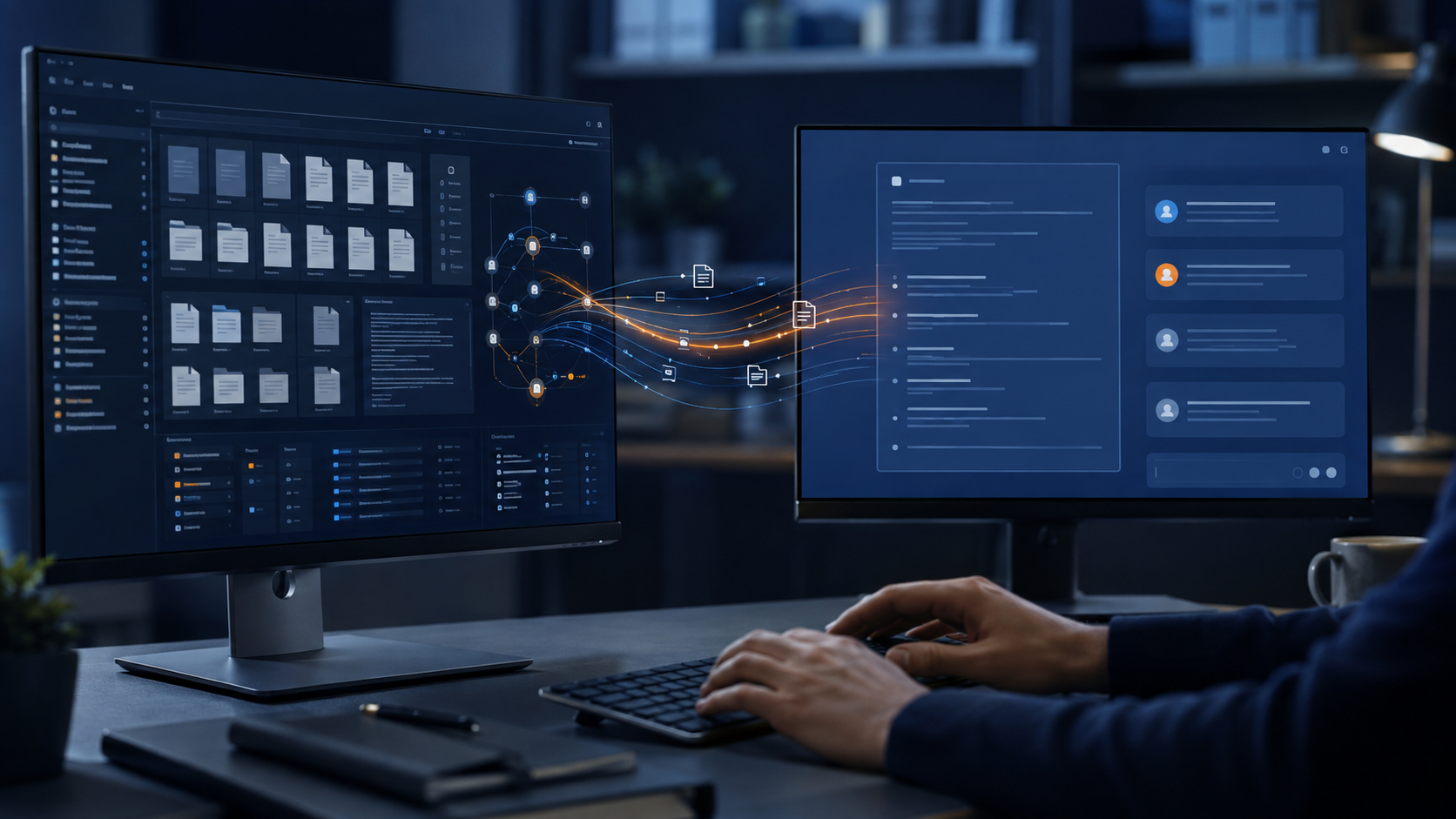
Relativity has announced a new connection between RelativityOne and Microsoft Copilot, bringing selected legal-data administration and reporting tasks into a workspace many legal professionals already use. The integration is an important example of where legal AI is heading: away from isolated chat tools and toward governed connections with the systems that hold matter data.
The announcement is promising, but narrower than a headline about AI and e-discovery might suggest. The immediate opportunity is not unsupervised legal analysis. It is a more convenient way to perform authorized operational tasks, obtain administrative reports, and move between platforms with less friction.
What Relativity announced
According to Relativity’s announcement, RelativityOne now integrates with Microsoft Copilot through the Model Context Protocol, commonly called MCP. MCP provides a standardized way for an AI assistant to connect with external tools and data sources.
Relativity says the current integration supports orchestration and reporting in Copilot Cowork. Examples include creating workspaces, organizing case data, managing selected legal-operations tasks, reviewing workspace access, and generating administrative reports through natural-language requests. Reporting capabilities are available in Copilot Chat, while broader orchestration there is planned for later in 2026.
That distinction matters. The announced functions center on administration and workflow support. Relativity did not announce that Copilot can independently make legal judgments, determine relevance, or replace attorney review. Teams should base rollout decisions on what is available now, not assumptions about future AI capability.
Why the connection model matters
Microsoft describes MCP-based federated connectors as a way to retrieve information from an external system in real time instead of copying and indexing it into Microsoft 365. Its federated-connectors documentation says access is governed by the signed-in user’s identity and existing permissions. Partner connectors must also be approved and enabled by administrators.
RelativityOne’s MCP documentation identifies Microsoft Copilot Chat and Copilot Cowork as supported clients. Together, these sources describe a model in which Copilot can request an authorized action or retrieve permitted information without turning every external record into a new Microsoft 365 index.
That architecture can reduce some forms of data duplication, but it does not eliminate governance work. A natural-language interface makes a system easier to use; it does not correct excessive permissions, poor matter structure, inconsistent naming, or weak access reviews.
What this means for litigation teams
First, review permissions before enabling a connector. Matter teams should confirm workspace membership, administrator roles, client restrictions, and ethical walls. Identity-based controls are only as reliable as the underlying access assignments.
Second, begin with a limited operational use case. A pilot might focus on workspace setup, access reporting, or another repeatable administrative task. Define who may use it, what a successful result looks like, and which actions still require human confirmation.
Third, preserve an audit trail. Document approved use cases, administrator settings, testing results, and escalation procedures. Any generated report or automated action should be checked against the source system before it supports a consequential decision.
Finally, train people on the boundary between convenience and judgment. Prompting an administrative workflow is different from asking an AI system to interpret evidence, assess privilege, or recommend litigation strategy. Attorney supervision, confidentiality duties, discovery obligations, and client requirements remain in place.
For Philadelphia, South Jersey, and Mid-Atlantic firms already working in Microsoft 365 and RelativityOne, the most immediate benefit may be less platform switching for litigation-support and e-discovery administrators. A narrow, permission-reviewed pilot is easier to evaluate, secure, and improve.
A sign of legal technology’s next phase
Relativity’s Copilot integration reflects a broader shift toward AI assistants that can act across authorized business systems rather than merely draft text. The value will depend less on novelty and more on disciplined implementation: clean access controls, clear workflows, trained users, and human verification.
Webesco helps legal teams support technology-intensive matters through trial presentation and litigation technology services, video depositions, and forensic media. As connected AI tools enter everyday legal workflows, dependable preparation and careful human oversight remain essential.